
Maasdam Cheese: Origin, History, Production, and Characteristics
Maasdam cheese is a popular Dutch semi-hard cheese known for its distinctive large holes, smooth yellow rind, and mild, nutty, and slightly sweet flavour. Made from cow's milk, this Emmental-style cheese originates in the Netherlands and is characterised by its relatively short maturation period and softer texture compared with traditional Swiss Emmental cheese.
Aged for at least four weeks, Maasdam cheese ripens faster than many other Dutch cheeses. Its higher moisture content gives it a softer consistency, making it a versatile cheese for sandwiches, snacks, and various cooked dishes.
What Is Maasdam Cheese?
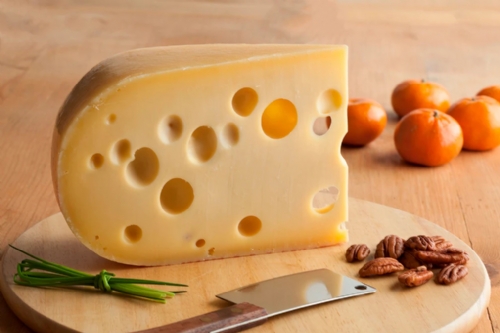
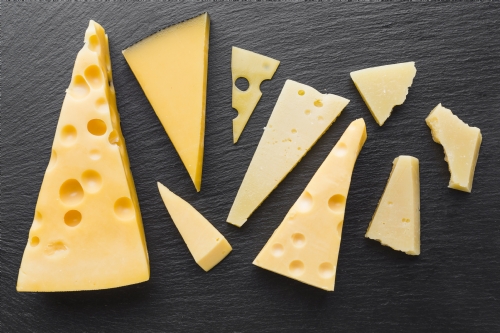
Maasdam is a Dutch cheese inspired by traditional Swiss Emmental. It features a pale yellow interior with characteristic holes, also known as eyes, that develop during the cheese-ripening process.
The cheese has a smooth, yellow rind that is sometimes coated with wax, similar to Gouda. Its flavour is mildly savoury, nutty, and sweet, while its texture is softer and more elastic than that of Swiss Emmental.
Made from cow's milk, Maasdam cheese is typically matured for a minimum of four weeks. Its relatively quick production process makes it an affordable alternative to traditional Swiss Emmental cheese.
History and Origin of Maasdam Cheese
Maasdam cheese was developed in the Netherlands to compete with Swiss Emmental cheeses. Dutch cheese producers aimed to create a cheese with similar characteristics that could be manufactured more quickly and sold at a lower price.
The Maasdam cheese style was introduced in 1984 by a Dutch company under the trademarked name Leerdammer. It subsequently became popular among other Dutch cheese producers, who began manufacturing similar cheese under the generic name Maasdammer.
The name Maasdammer was chosen in honour of the village of Maasdam, located in the province of South Holland in the Netherlands.
How Is Maasdam Cheese Made?
Maasdam cheese is made from cow's milk using a production process inspired by Swiss Emmental cheese-making techniques.
Although it shares many general production characteristics with Emmental, Maasdam has a shorter maturation period and a higher moisture content. These differences contribute to its softer texture and distinctive flavour.
The cheese is generally aged for at least four weeks, allowing it to develop its characteristic taste, texture, and internal holes.
Why Does Maasdam Cheese Have Holes?
One of the most recognisable characteristics of Maasdam cheese is its large internal holes, commonly called eyes.
These holes develop during the ripening process as bacteria produce carbon dioxide inside the cheese. The trapped gas creates the characteristic openings that give Maasdam its resemblance to Swiss Emmental.
Its smooth yellow interior and regularly distributed holes make Maasdam particularly recognisable among Dutch cheeses.
What Does Maasdam Cheese Taste Like?
Maasdam cheese has a mild, nutty, and slightly sweet flavour. Compared with traditional Swiss Emmental, it is generally softer and has a higher moisture content.
Its main characteristics include:
- Flavour: Mild, nutty, and slightly sweet.
- Texture: Smooth, semi-hard, and relatively soft compared with Emmental.
- Colour: Pale yellow to golden yellow.
- Rind: Smooth, yellow, and sometimes wax-coated.
- Holes: Distinctive internal openings formed during maturation.
- Milk: Cow's milk.
- Ageing: At least four weeks.
Maasdam Cheese vs. Emmental Cheese
Maasdam and Emmental are similar in appearance because both belong to the family of Swiss-type cheeses and feature characteristic internal holes.
However, there are some important differences:
| Characteristic | Maasdam | Emmental |
|---|---|---|
| Origin | Netherlands | Switzerland |
| Milk | Cow's milk | Cow's milk |
| Texture | Softer and more moist | Firmer and less moist |
| Flavour | Nutty, mild, and sweet | Mild and savoury |
| Holes | Large internal holes | Characteristic internal holes |
| Production | Developed as a quicker, less expensive alternative | Traditional Swiss cheese-making |
| Ageing | At least four weeks | Varies by variety |
Both cheeses are versatile and can be enjoyed on their own or incorporated into a variety of recipes.
How Is Maasdam Cheese Used?
Thanks to its mild flavour, smooth texture, and good melting properties, Maasdam cheese is suitable for a wide range of culinary applications.
Common uses include:
- Sandwiches and toasties
- Burgers and cheeseburgers
- Cheese platters and appetisers
- Salads and cold dishes
- Grilled cheese sandwiches
- Baked dishes and gratins
- Cheese-based snacks
Its slightly sweet and nutty flavour makes it particularly suitable for sandwiches and recipes that benefit from a mild, easily melted cheese.
Conclusion
Maasdam cheese is a distinctive Dutch semi-hard cheese inspired by Swiss Emmental. Developed in 1984, it was created to offer a more affordable cheese with similar characteristics to traditional Emmental but a shorter production and maturation period.
Its large internal holes, smooth yellow rind, mild nutty flavour, and softer texture have made Maasdam a popular cheese internationally. Whether served in sandwiches, on cheese platters, or in cooked dishes, Maasdam offers a versatile alternative to traditional Swiss-style cheeses.