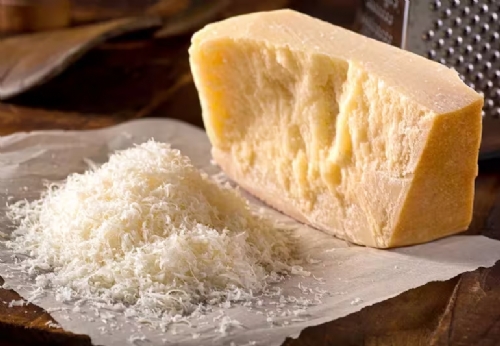
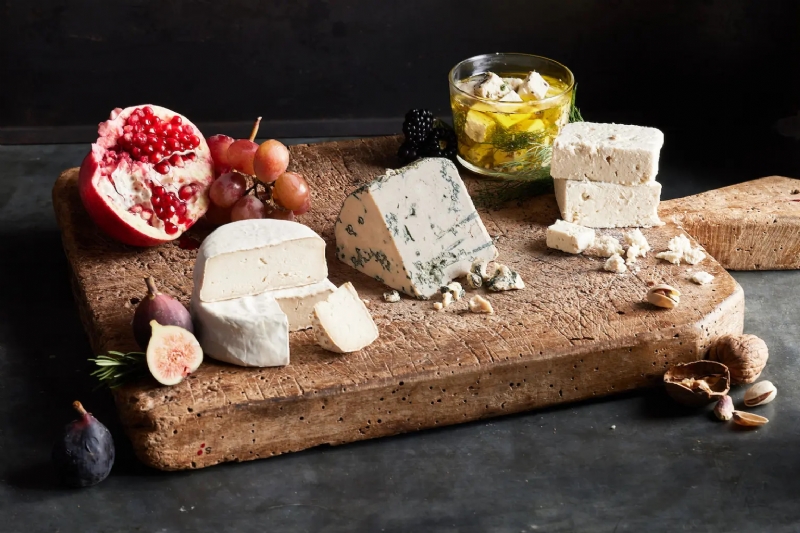
Vegan cheese is a category of non-dairy, plant-based cheese alternative. Vegan cheeses range from soft fresh cheeses to aged and cultured hard grateable cheeses like plant-based Parmesan. The defining characteristic of vegan cheese is the exclusion of all animal products.]
Vegan cheese can be made with components derived from vegetables, such as proteins, fats and plant milks. It also can be made from seeds, such as sesame, sunflower, nuts (cashew, pine nut, peanuts, almond) and soybeans; other ingredients are coconut oil, nutritional yeast, tapioca, rice, potatoes and spices.
History
Fermented tofu (furu) has been documented in China since the late 16th century. The savory product is used as a condiment to accompany rice or porridge. Western sources from the 19th to 21st centuries repeatedly draw a comparison between furu and cheese, going as far as calling it a "nondairy/vegan cheese".
Later homemade vegan cheeses were made from soy flour, margarine, and yeast extract. With harder margarine, this can produce a hard vegan cheese that can be sliced; softer margarine produces a softer, spreadable cheese.
The product became commercially available from around the 1970s or 1980s. These initial products were lower in quality than dairy cheese or today's vegan cheese, with a waxy, chalky or plastic-like texture.
In the early 1990s, the only brand of vegan cheese available in the United States was Soymage. Since then, the number and types (e.g., mozzarella, cheddar, etc.) of widely available vegan cheeses have diversified. Also, soy-free options have since been explored. In the 1990s, vegan cheese sometimes cost twice as much as dairy cheese.
SOURCE: https://en.wikipedia.org/wiki/Vegan_cheese